 Skip-the-line available
 What to See at Château du Haut-Kœnigsbourg
The keep, the furnished halls, the armoury, the great bastion and the rampart panorama — what to prioritise and in what order.
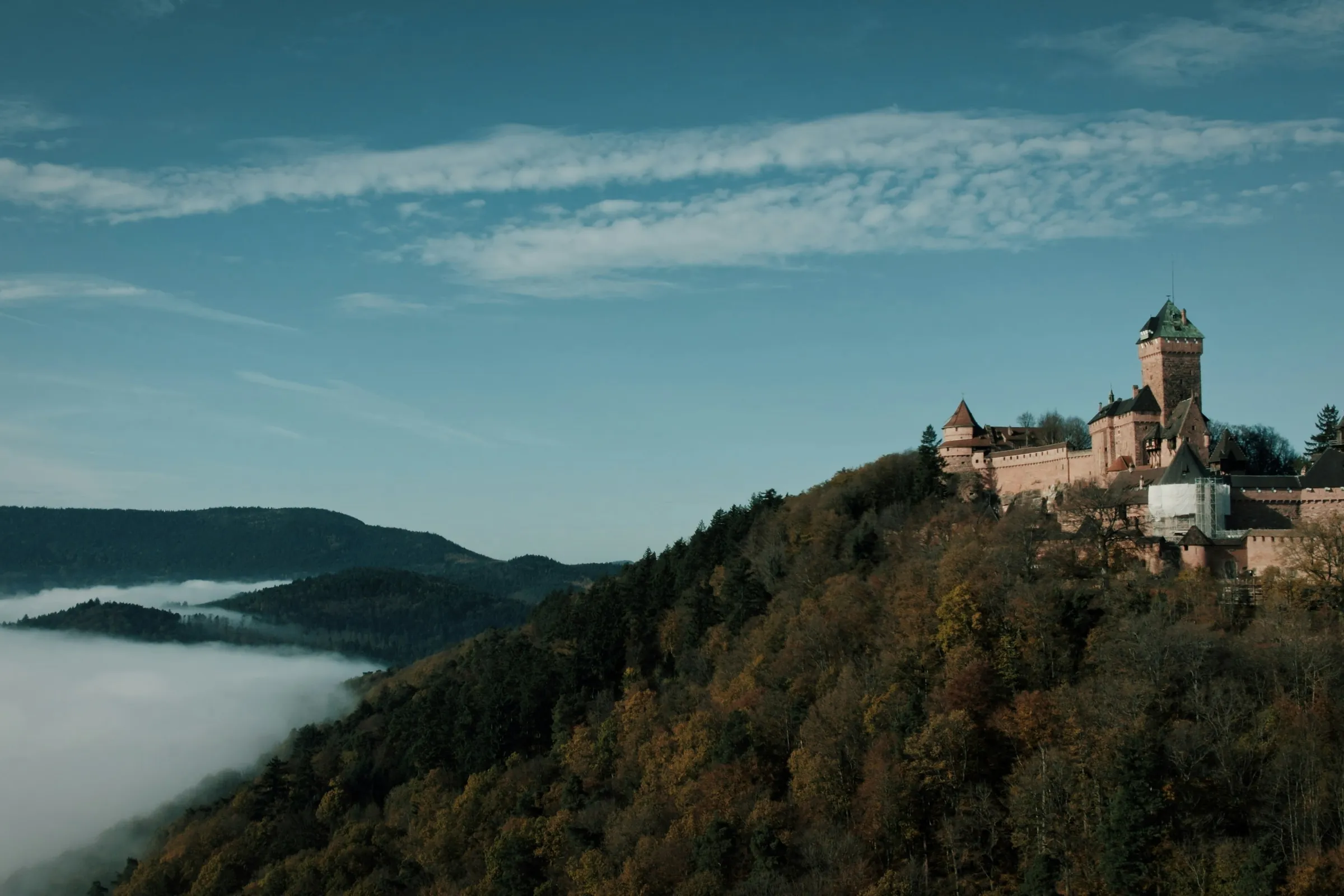
Haut-Kœnigsbourg is a complete medieval fortress recreated stone by stone, and the visit organises itself around a handful of unmissable spaces — the furnished halls, the keep, the armoury, the great bastion and, above all, the rampart panorama. Because the castle is a coherent reconstruction rather than a bare ruin, the experience is immersive: you cross the drawbridge, climb through living quarters and great halls, and emerge onto the high walls with Alsace spread out below. This guide walks through what to see, in what order, and how to spend your time so you reach the best spaces with energy to spare.
The Gate, the Drawbridge and the Courtyards
The visit begins as a medieval arrival should. You approach across the drawbridge and pass through the fortified gate into the lower courtyard, where the scale of the reconstruction becomes clear — curtain walls, towers and the keep rising above. Take a moment here to read the defensive layout: the way the gate, the walls and the bastion work together to control the approach explains why this summit was fortified for so many centuries. The courtyards, with their well, half-timbering and stonework, set the scene for everything inside.
From the courtyards you climb through the castle's levels. The route is laid out to lead you up through the living quarters and halls toward the keep and the ramparts, so you gain height — and views — as you go. Architect Bodo Ebhardt's reconstruction is full of detail to notice along the way: carved emblems and heraldry, period ironwork, and the join between authentic medieval stone and the early-1900s craftsmanship that completed the fortress between 1900 and 1908.
The Furnished Halls and the Armoury
Inside, the great halls and living quarters are furnished in period style to evoke aristocratic castle life — panelled rooms, painted decoration, tapestries, ceramics, furniture and great fireplaces — so that the interiors feel lived-in rather than empty. The grand hall and the chambers recreate the look of a late-medieval Alsatian fortress as Ebhardt and his sources imagined it, and they are what set Haut-Kœnigsbourg apart from a bare ruin: you walk through a complete castle, not a shell.
The armoury is a highlight, with its collection of weapons and armour bringing the fortress's military purpose to life — a favourite with children especially. Along the way you also pass the kitchens, the cellars and the chapel, each furnished and presented to show how such a castle functioned. Move through the interiors at a steady pace; they are rich but compact, and the climax of the visit waits above on the ramparts, so leave time and energy for the top.
The Keep and the Great Bastion
The keep is the highest point of the castle and the heart of its defences, and climbing it rewards you with the first of the great views out over Alsace. From here the layout of the whole fortress reads clearly below — the courtyards, the walls and the bastion arranged across the narrow summit. The keep embodies the fortress's purpose: a stronghold raised on the most commanding point of the ridge to watch and hold the routes through the plain.
At the western point stands the great round artillery bastion, the most striking piece of defensive architecture in the castle. Built with massively thick walls to absorb and return cannon fire, it faces the direction from which attack was most likely and anchors the whole fortress. Walking out onto and around the bastion gives a vivid sense of how the castle was designed for the age of gunpowder, and it offers some of the finest open views from the summit.
The Ramparts and the Panorama
The ramparts are, for most visitors, the highlight — and the reason to leave time and energy for the top of the visit. Walking the high walls and terraces, the view opens over the entire Alsace plain immediately below, the vineyards and villages of the wine route, the Rhine valley beyond, and, on a clear day, the Black Forest across the river in Germany. At about 755 metres the elevation gives the panorama real sweep and drama, and it explains in an instant why this summit was fortified for so many centuries.
Give the ramparts real time and walk their full circuit; the view changes with every side of the castle, and the fortress's silhouette against the plain is at its best in the low light of early morning or late afternoon. The summit is breezier and cooler than the valley, so bring a layer, and on a misty day be philosophical — the open-date ticket lets you choose a clear day. This is the one space at Haut-Kœnigsbourg that no visitor should rush.
Frequently asked
What is the must-see at Haut-Kœnigsbourg?
The summit ramparts and their panorama over Alsace, reached by climbing through the furnished halls and the keep. The great artillery bastion and the armoury are the other highlights, along with the period interiors that make it feel like a complete castle.
Is the castle furnished inside?
Yes. Unlike a bare ruin, the halls and living quarters are furnished in period style — panelling, tapestries, furniture, ceramics and an armoury — as part of the 1900–1908 reconstruction, so you walk through a complete late-medieval fortress.
What is the great bastion?
The large round artillery bastion at the western point of the castle, built with massively thick walls to face and absorb cannon fire. It is the most striking piece of defensive architecture on the site and offers some of the finest views.
How long do I need inside?
Allow about 1.5 to 2 hours for the courtyards, the furnished halls, the keep, the bastion and the ramparts, plus time for the panorama. Add an afternoon if you combine the visit with the wine route or Colmar.
Can I walk the ramparts?
Yes — the ramparts and summit terraces are the highlight of the visit, with the sweeping panorama over Alsace. They involve steps and uneven historic surfaces, so they are difficult for wheelchair users; take care underfoot.
What should I see first?
Follow the route up through the courtyards and furnished halls to the keep and the ramparts, saving the panorama for the top. In summer, climbing early means quieter interiors and clearer morning air for the views before the midday coaches arrive.
Is it interesting for children?
Very. A real mountaintop castle with a drawbridge, ramparts, a keep to climb and an armoury full of weapons and armour captures children's imaginations. The youth ticket covers ages 6 to 17; keep younger children close on the ramparts and stairs.