What's included in the skip-the-line ticket?
Priority entry past the ticket-office queue, plus access to the whole castle — the keep, the furnished halls and chambers, the cellars, the great round bastion, the courtyards and the summit ramparts with their panorama over Alsace. The ticket is open-dated, so you choose your own day.
Is the ticket for a specific time slot?
No. The standard adult and youth tickets are open admission — valid during opening hours on the day you visit, with no fixed time slot. We issue an open-dated ticket so you can arrive whenever suits you and walk straight in.
Do I need to print my ticket?
No. Your e-ticket is accepted on your phone at the gate — just show it on screen. There is no need to print anything.
How do I get to Haut-Kœnigsbourg from Colmar?
By car it is about 30 minutes (around 25 km) north via the A35, then up the winding mountain road from Saint-Hippolyte or Kintzheim. There is no direct train; without a car, the practical options are a taxi, an organised tour, or the train to Sélestat plus the seasonal shuttle bus.
How do I get there from Sélestat?
Sélestat has the nearest railway station, about 12 km away. By car it is 15–20 minutes up the mountain road. In the high season a seasonal shuttle bus connects Sélestat station with the castle — check the current timetable before you travel, as services are limited.
Is there parking, and is there a walk up to the castle?
Yes — there are car parks below the castle, and from them a short uphill walk on a sloping path leads to the entrance. The final approach is on foot and is moderately steep; allow a few extra minutes and wear comfortable shoes, especially in wet weather.
How long does a visit take?
Allow about 1.5 to 2 hours for the castle itself — the keep, the furnished interiors, the great bastion and the ramparts — plus a little more time to take in the panorama from the summit and the walk up from the car parks.
What is there to see inside?
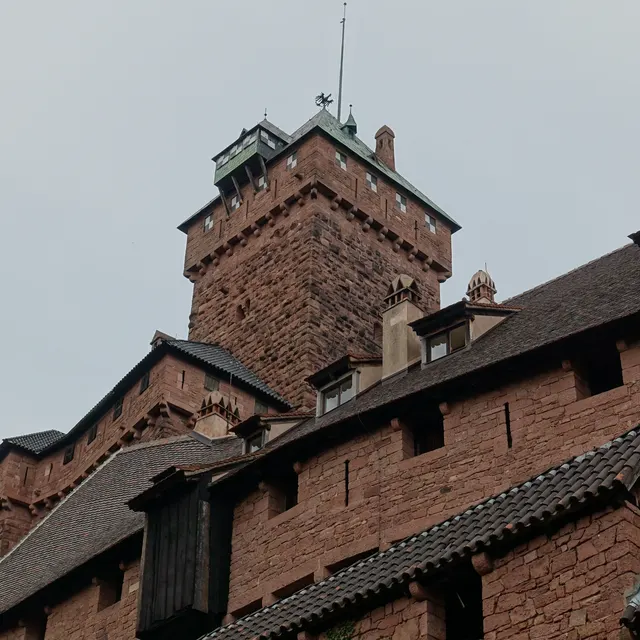
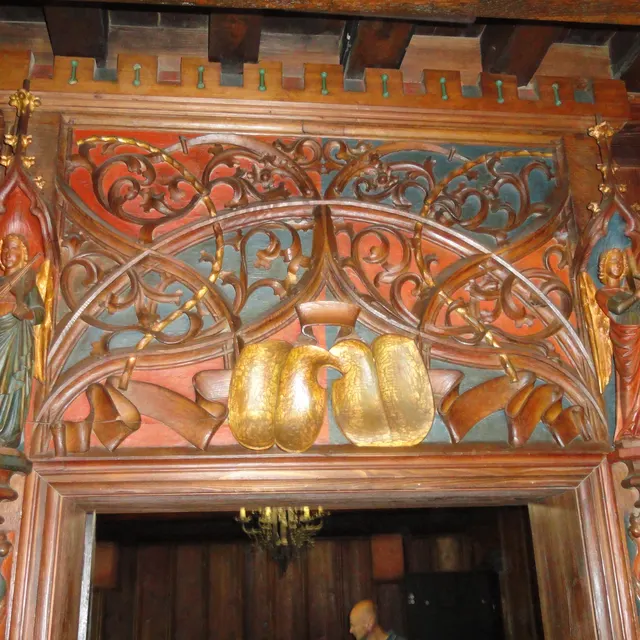
The reconstruction by Bodo Ebhardt recreates a late-medieval Alsatian fortress: the keep, furnished halls and living quarters, an armoury and weapons collection, the kitchens and cellars, the chapel, the great round artillery bastion, the drawbridge and the high ramparts. The interiors are furnished in period style to evoke castle life.
Is the castle a genuine ruin or a reconstruction?
Both. The medieval fortress, first recorded in 1147, was ruined after a siege in 1633 and stood as a ruin for nearly three centuries. Between 1900 and 1908 the architect Bodo Ebhardt rebuilt it on the surviving foundations as an idealised vision of a late-medieval castle. What you visit today combines authentic medieval fabric with that early-1900s reconstruction.
How good are the views from the top?
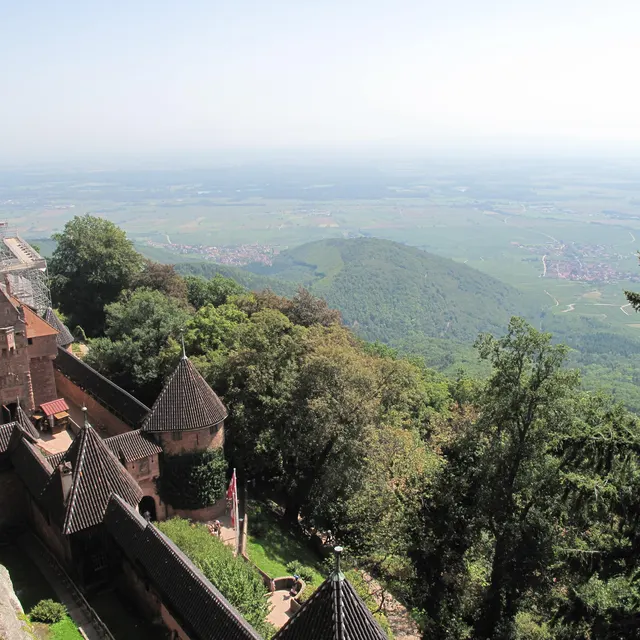
Outstanding. At about 755 metres the castle commands a sweeping panorama over the whole Alsace plain, the vineyards and villages of the wine route, and the Rhine valley; on a clear day you can see across to the Black Forest in Germany. The summit ramparts are the best vantage point.
Can I take photographs?
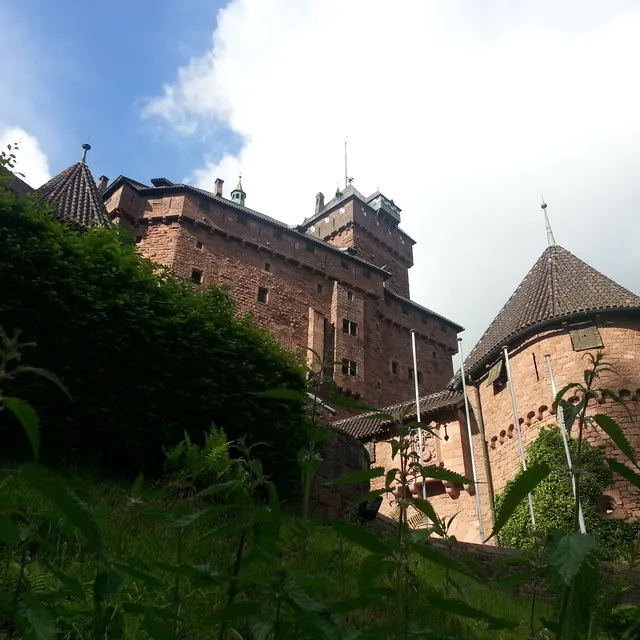
Yes — photography for personal use is permitted throughout without flash or tripod. The fortress silhouette from the approach road and the panorama over the Alsace plain from the ramparts are the classic shots.
Is it accessible for visitors with limited mobility?
Only partly. This is a steep medieval fortress on a mountain summit, with sloping paths, cobbles, stairs and uneven historic surfaces, so much of it is difficult for wheelchair users and those with limited mobility. A reduced accessible route covers part of the site. If mobility is a concern, contact us before booking and we will confirm the current arrangements.
Can I change the date of my visit?
Your ticket is open-dated, so for most visits you simply turn up on the day you choose during opening hours. If you have any concern about your plans, reply to your confirmation email and our concierge team will help.
Is it suitable for children?
Very. A real mountaintop castle with a drawbridge, ramparts to walk, a keep to climb and an armoury of weapons captures children's imaginations. The youth ticket covers ages 6 to 17. Note the steep approach and uneven surfaces, so keep younger children close on the ramparts and stairs.
What is the weather like up there?
At 755 metres the summit is noticeably cooler and breezier than the plain below, and cloud can settle on the ridge even when the valley is clear. Bring a layer and check the forecast; on a clear day the views are spectacular, but mist can occasionally close in around the castle.
Was a film shot here?
Yes — Jean Renoir filmed scenes of his celebrated 1937 anti-war film La Grande Illusion at Haut-Kœnigsbourg, which the castle is well known for. Its dramatic silhouette has made it a favourite location and a recognisable Alsatian landmark.
Can I combine it with the Alsace wine route or Colmar?
Easily. The castle sits directly above the Alsace wine route, with the villages of Kintzheim, Saint-Hippolyte and Bergheim at its foot, and Colmar — one of Alsace's most beautiful towns — about 30 minutes away. Many visitors pair the castle in the morning with wine-route villages or Colmar in the afternoon.
What is the Château du Haut-Kœnigsbourg?
The Château du Haut-Kœnigsbourg is a mountaintop medieval fortress in Alsace, eastern France, standing at around 755 metres on a ridge of the Vosges mountains above the Alsace plain. First recorded in 1147, it served as a strategic stronghold for centuries until it was besieged and burned during the Thirty Years' War in 1633 and left in ruins. Between 1900 and 1908 it was rebuilt by the architect Bodo Ebhardt for the German Kaiser Wilhelm II, who wanted a symbol of imperial Alsace, and that reconstruction is what visitors see today: furnished rooms, a great hall, a drawbridge, ramparts and a keep with sweeping views toward the Black Forest. The castle appeared in Jean Renoir's 1937 film La Grande Illusion and now welcomes around half a million visitors a year, making it one of the most visited castles in France.
How do I get to the Château du Haut-Kœnigsbourg?
The castle sits above the village of Orschwiller, between Sélestat and the Alsace wine route. The nearest railway station is Sélestat, on the main Strasbourg–Colmar–Mulhouse line, about 12 kilometres away; from there it is roughly a 15 to 20 minute drive up the winding mountain road. In the high season a seasonal shuttle bus runs from Sélestat station to the castle and is the cheapest option, but services are limited, so always check the current timetable before you travel. Outside the shuttle season, or if the timing does not suit, a taxi covers the distance in about 15 to 20 minutes. By car, the castle has its own car park a short walk from the entrance. Strasbourg is around 55 minutes away and Colmar about 30 minutes, so the castle pairs naturally with a wider Alsace itinerary.
Is the Haut-Kœnigsbourg ticket open-dated or for a fixed time slot?
Open-dated. The standard admission is open during opening hours on the day you visit, with no fixed entry time. We issue an open-dated ticket so you can choose your own day and walk straight in past the queue, showing the e-ticket on your phone.
Which ticket should I book — adult or youth?
Book the adult ticket for visitors 18 and over, and the youth ticket for children and teenagers aged 6 to 17. Both are open-dated and cover the whole castle. Children under 6 are not ticketed separately. Each visitor needs their own ticket of the right type.
Is the castle real or a reconstruction?
Both. The medieval fortress, first recorded in 1147, was ruined after a siege in 1633. Between 1900 and 1908 the architect Bodo Ebhardt rebuilt it on its foundations as an idealised late-medieval castle. What you visit combines authentic medieval fabric with that early-1900s reconstruction.
How do I get there without a car?
Take a train to Sélestat, the nearest station, then the seasonal high-season shuttle bus to the castle, or a taxi (about 15–20 minutes). Organised tours from Colmar or Strasbourg also cover the castle and handle the transport. Check shuttle timetables in advance, as services are limited.
Is there a walk up to the castle?
Yes. From the car parks below, a short, moderately steep uphill path leads to the entrance. Wear comfortable shoes, allow a few extra minutes, and take care in wet weather as the surfaces can be slippery.
Is Haut-Kœnigsbourg wheelchair accessible?
Only partly. It is a steep mountaintop fortress with sloping paths, cobbles, stairs and uneven historic surfaces, so much of it is difficult for wheelchair users. A reduced accessible route covers part of the site. Contact us in advance for the current arrangements.
When is the castle closed?
Haut-Kœnigsbourg is open daily with only three annual closures: 1 January, 25 December and 26 December. Hours are seasonal — longer in summer, with a split timetable and a midday closure in winter — and last admission is one hour before close.
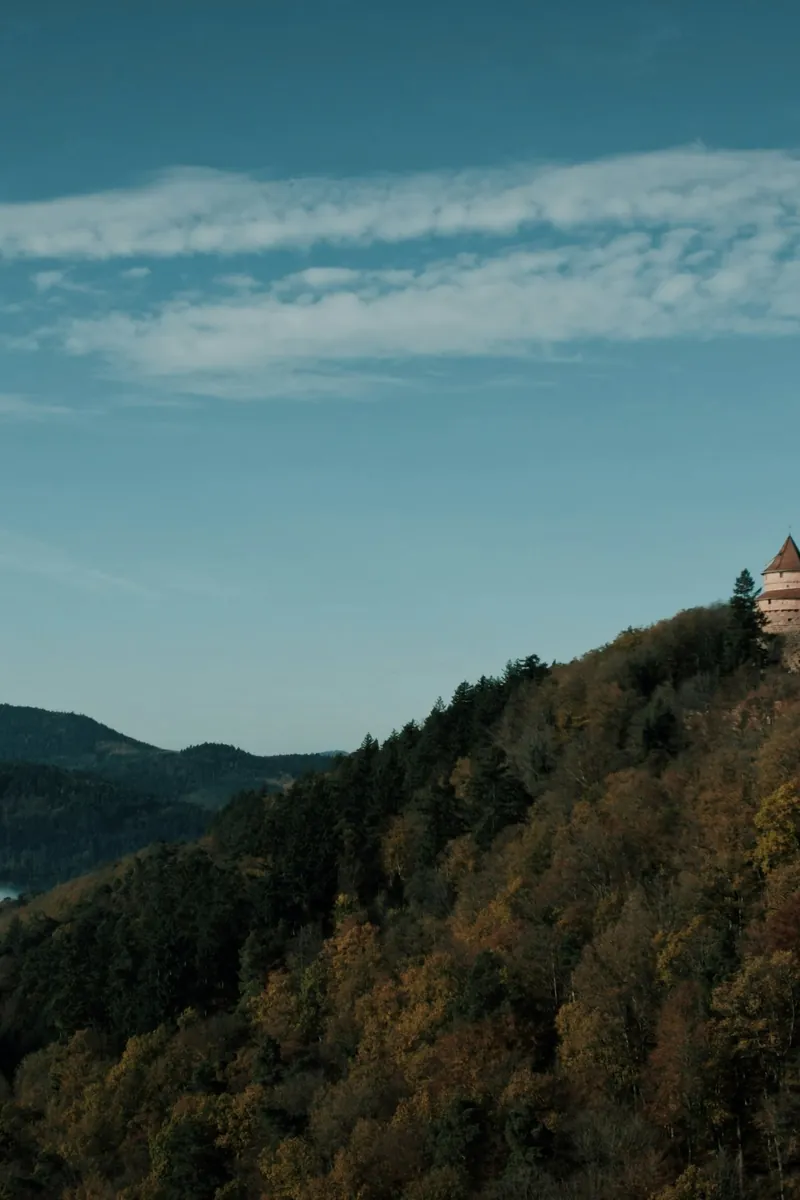
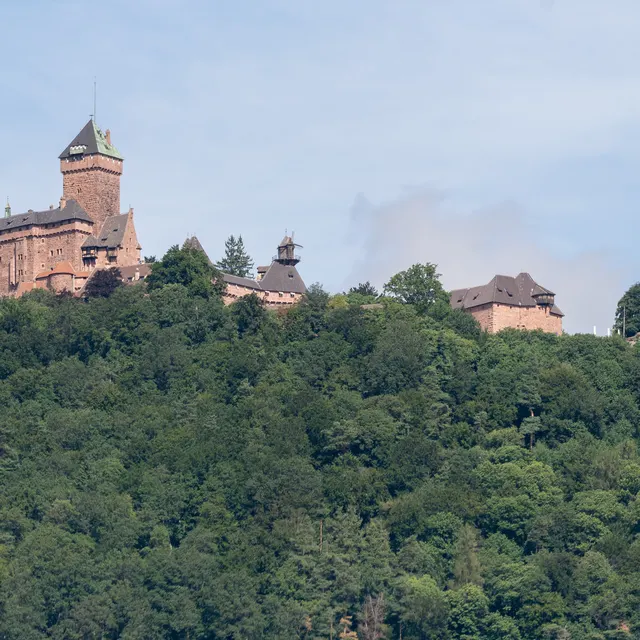
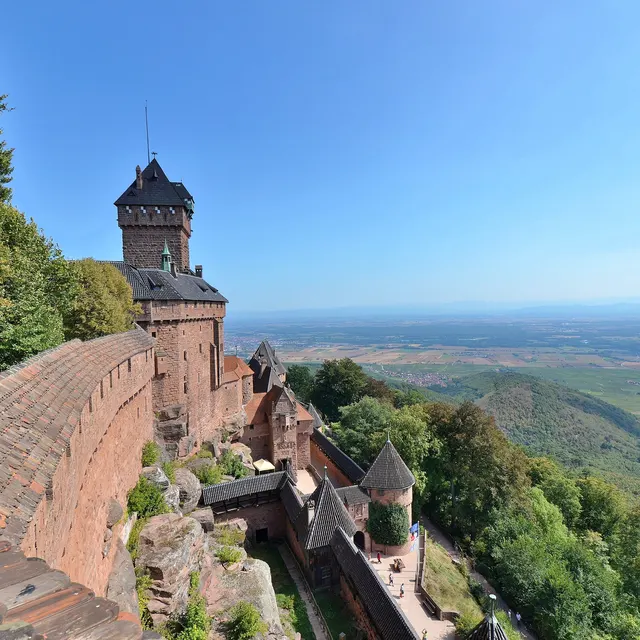
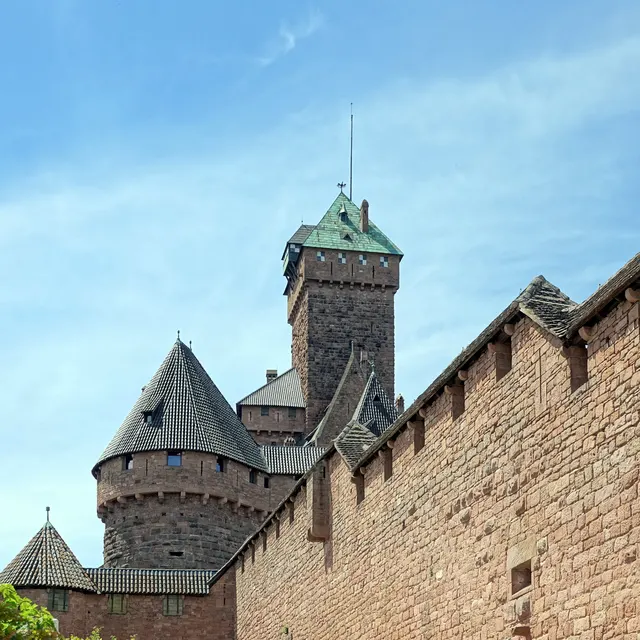 What is the Château du Haut-Kœnigsbourg?The Château du Haut-Kœnigsbourg is a medieval mountain fortress on a rocky summit at around 755 metres in the Vosges, looking out over the whole Alsace plain near the village of Orschwiller.
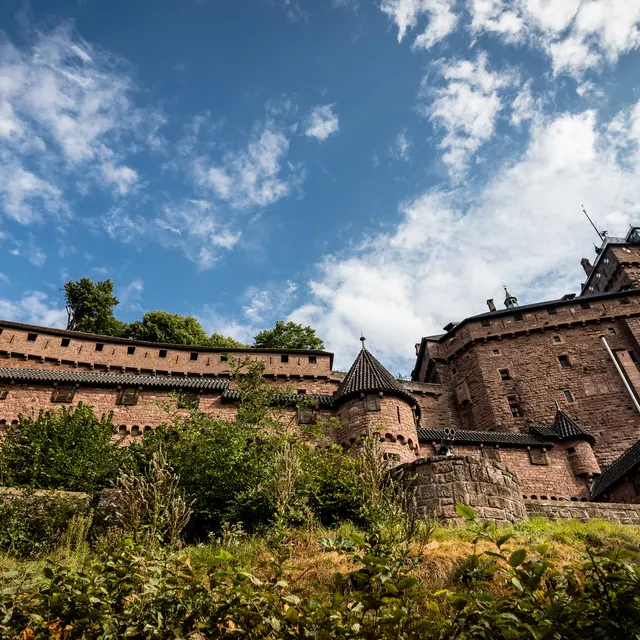 The ruin and the 1900s reconstructionFor nearly three centuries after the siege of 1633 the castle was an overgrown ruin on the Vosges skyline, its walls slowly collapsing.
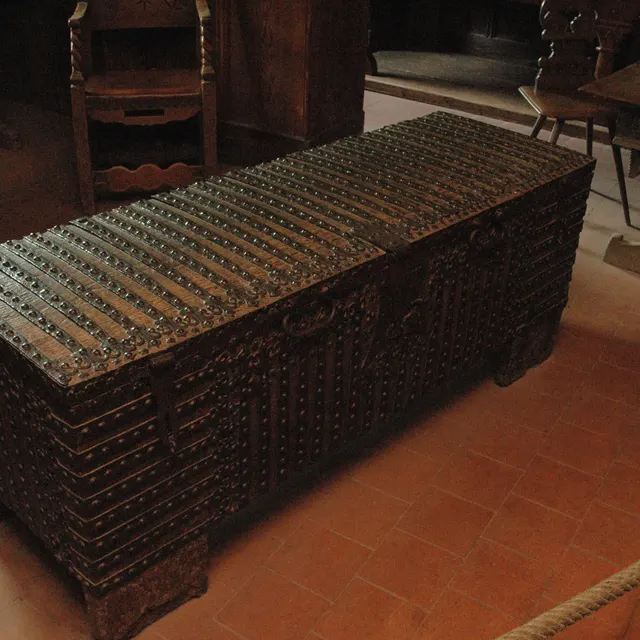 What's inside the castle?A visit takes you through a full medieval fortress as Ebhardt reimagined it.
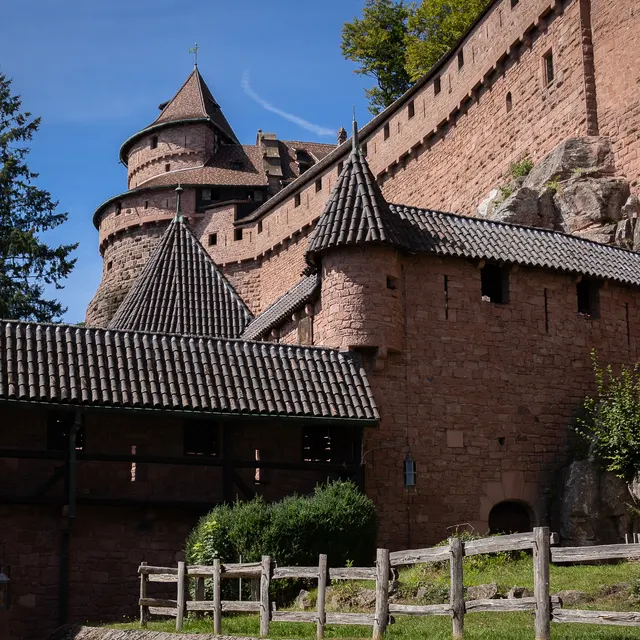 How does ticketing work?The castle sells a standard admission ticket that covers the whole fortress — the courtyards, the furnished halls and living quarters, the keep, the armoury, the cellars, the great bastion and the summit ramparts with their panorama.
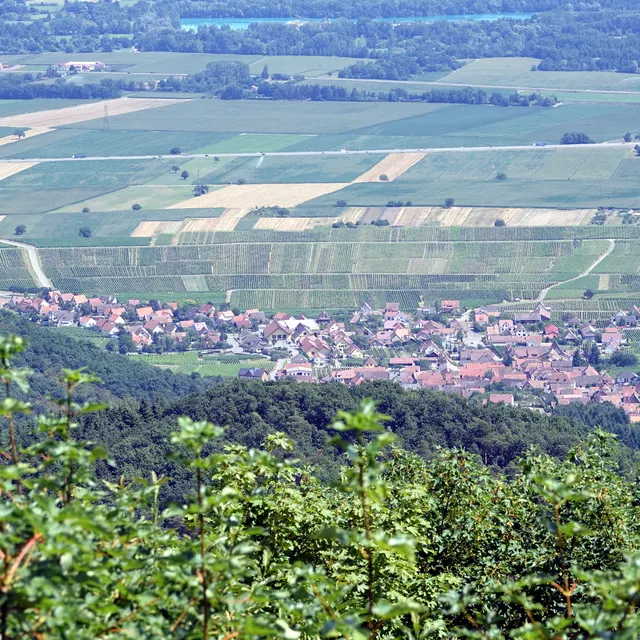 When is the best time to visit?Arrive at opening or in the late afternoon.
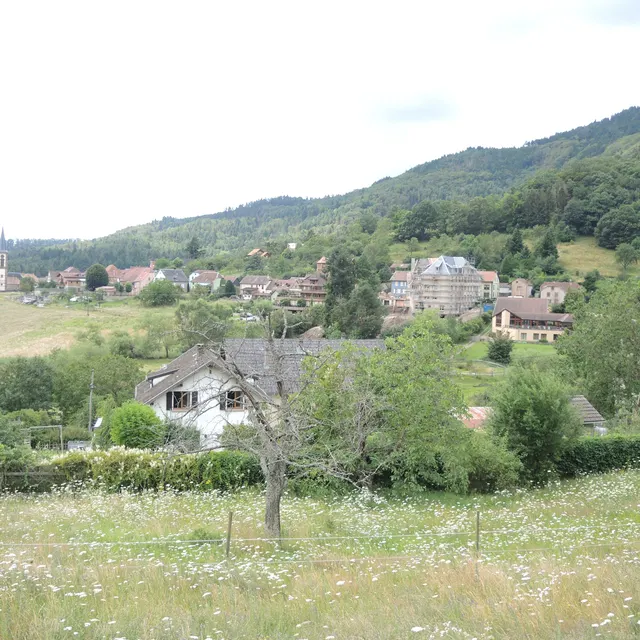 How do you get to Haut-Kœnigsbourg?The castle sits on a Vosges summit above Orschwiller, between Sélestat and the Alsace wine route, and a car is the easiest way to reach it.
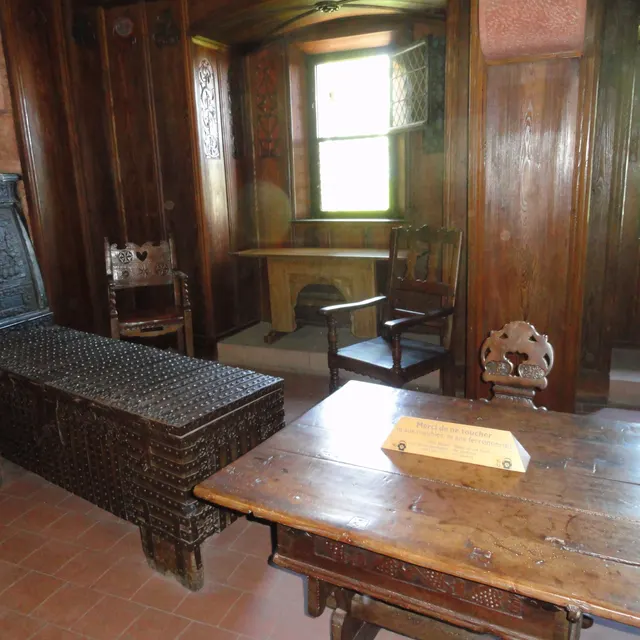 Is the castle accessible for visitors with mobility needs?Haut-Kœnigsbourg is a steep medieval fortress on a mountain summit, and that sets real limits on accessibility.
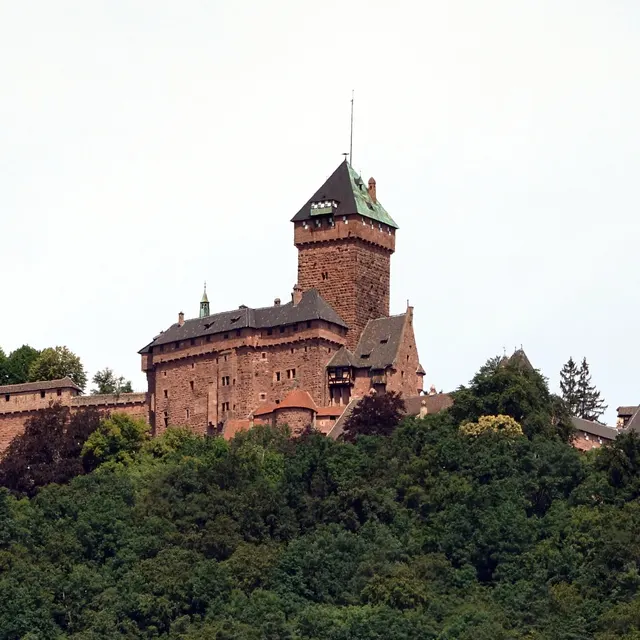 Can I combine the castle with the Alsace wine route or Colmar?Yes — and it is one of the best things about visiting.